Taproom food that works with beer
Salt, fat, acid, heat, roast, texture, and why simple taproom food can make a better pint.
The short answer
Taproom food works with beer when it uses simple levers: salt to sharpen malt, fat to soften bitterness, acid to lift rich food, heat to meet hop aroma, roast to match dark beer, and texture to keep each bite from feeling heavy.
- Salt, fat, acid, heat, roast and crunch solve most beer-pairing questions.
- A taproom menu should be quick to read and built around what is on tap.
- Pairing notes help people choose without making them study beer vocabulary.
Use contrast before complexity
Beer pairing does not need a sommelier. Most good pairings come from contrast: crisp lager with salty fries, citrus pale ale with tacos, IPA with fatty or spicy food, amber ale with roast pork, porter with chocolate or braised meat.
The job of taproom food is to keep the beer interesting. Food should reset the palate, soften an edge, or pull out a flavour that was already in the glass.
The five levers that matter
Salt wakes up malt and makes a clean lager taste brighter. Fat rounds off bitterness and gives hop aroma something to push against. Acid cuts richness. Heat gives pale ales and IPAs a job beyond bitterness. Roast links dark beer to char, cocoa, coffee and browned food.
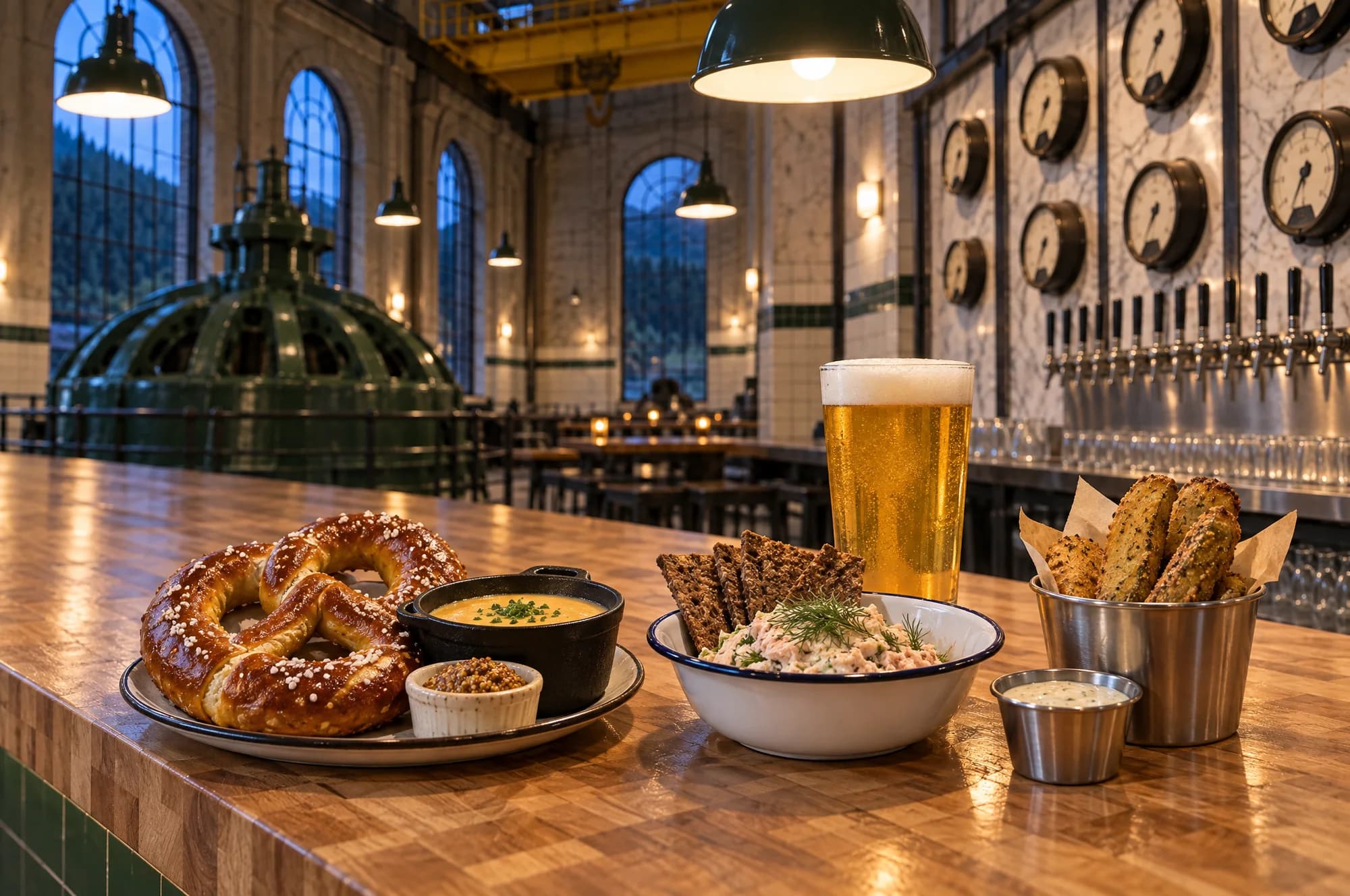
A brewery menu can use those levers and stay simple. Pretzels, tacos, fried pickles, bratwurst, pierogies, mushroom pie, grilled cheese and chocolate cake all work because they are direct.
- Lager plus salt and crunch
- Pale ale plus citrus, herbs, or spice
- IPA plus fat, heat, or sharp cheese
- Amber plus roast, mushroom, or sausage
- Porter plus cocoa, char, or braised meat
Fast food service protects the room
A brewery kitchen has to respect pacing. People are already choosing drinks, watching the clock for an event, and moving around the room. A short menu with clear pairings works better than a long restaurant menu that slows service down.
That is why every plate on our menu names one beer it likes. The pairing tells you where to start, and you are free to ignore it.
Pairings belong where people choose
Pairings should sit where people actually choose a beer: on the board, on the menu, and beside the can notes.
On our menu, Mainline Lager gets the hall pretzel, Breaker IPA gets the smash burger, Copper Coil Amber gets the porchetta and the mushroom pie, and Blackout Porter gets the braised beef and the chocolate cake it is baked into.
Questions
What food goes best with lager?
Crisp lager works well with salty, crunchy food such as pretzels, fries, bratwurst, fried fish, and simple snacks that do not bury the beer.
What food goes best with IPA?
IPA often works with fatty, spicy, or sharp food, because fat softens bitterness and heat gives hop aroma something to play against.
Does taproom food need to be fancy?
No. Taproom food needs to be clear, quick, and built around what is on tap. Simple food can make the pint better when the pairing is written down.