Inside the hydro powerhouse brewery
The story behind Breaker Room: a 1923 machine hall, the generator we kept, the switchboard that became the tap wall, and where the beer names come from.
The short answer
Breaker Room Brewing pours in one building: a 1923 hydroelectric powerhouse on the Kootenay River at Dynamo, BC. The board-formed concrete, the tall arched windows, the gantry crane, one original generator and the marble switchboard, now our tap wall, all came with the building. We kept them and put the beer around them.
- The powerhouse was built in 1923 and its generator ran until 1971. One of the two still stands in the middle of the hall.
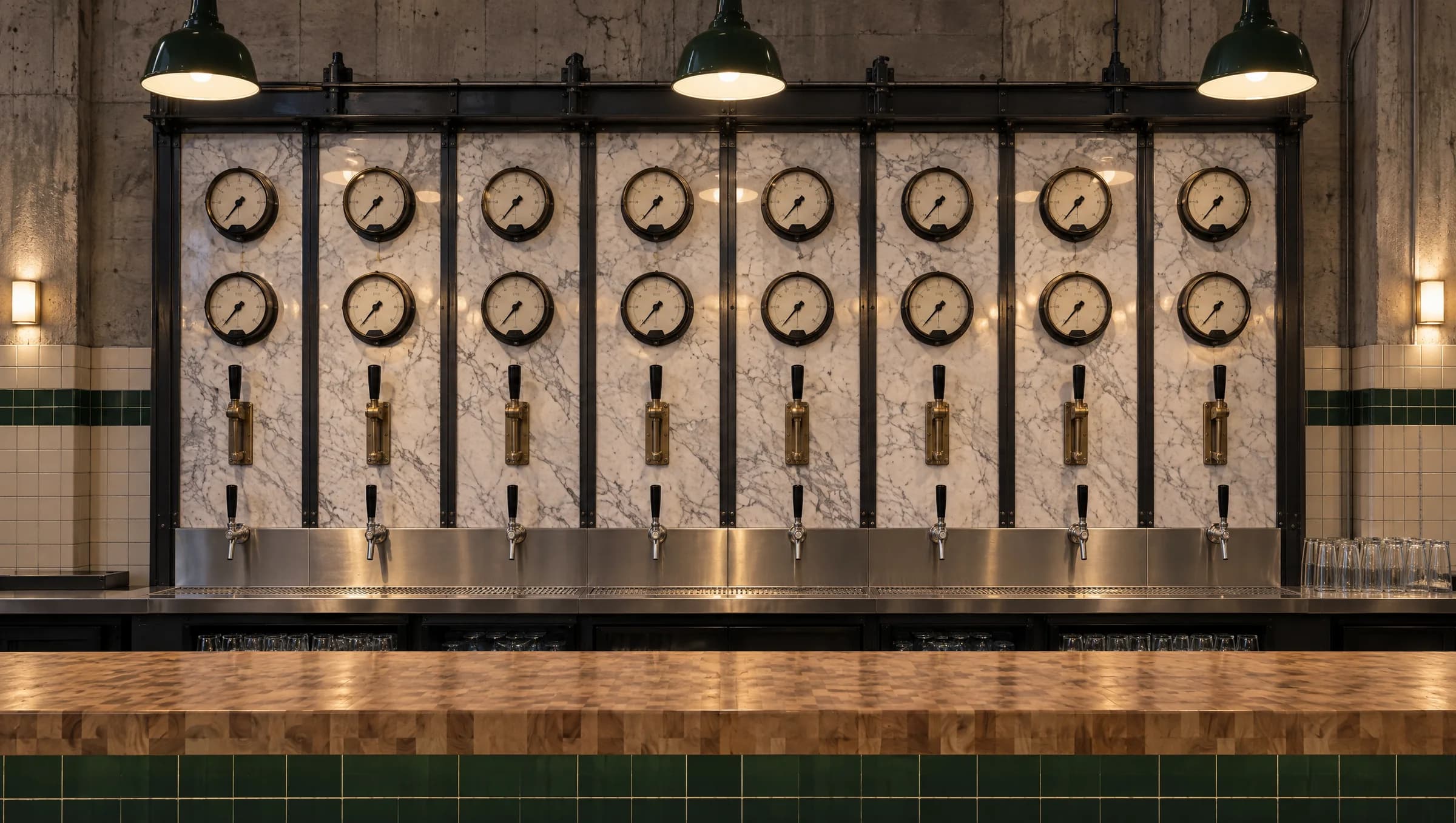
- The original marble switchboard is the tap wall now: eight panels, two brass meters on each, and one faucet under each panel.
- Every beer on the board is named for something in the station's working life.
The building came first
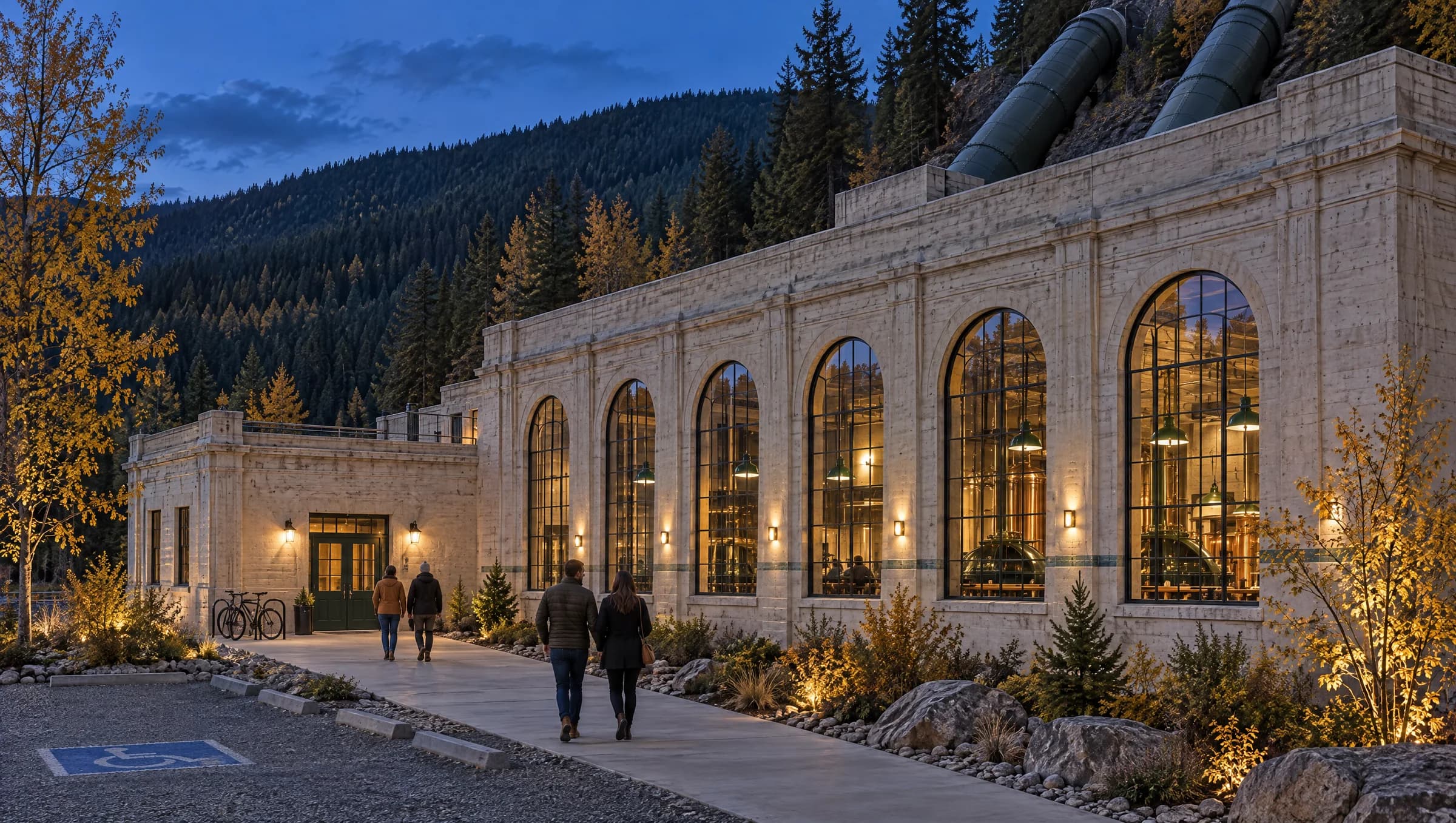
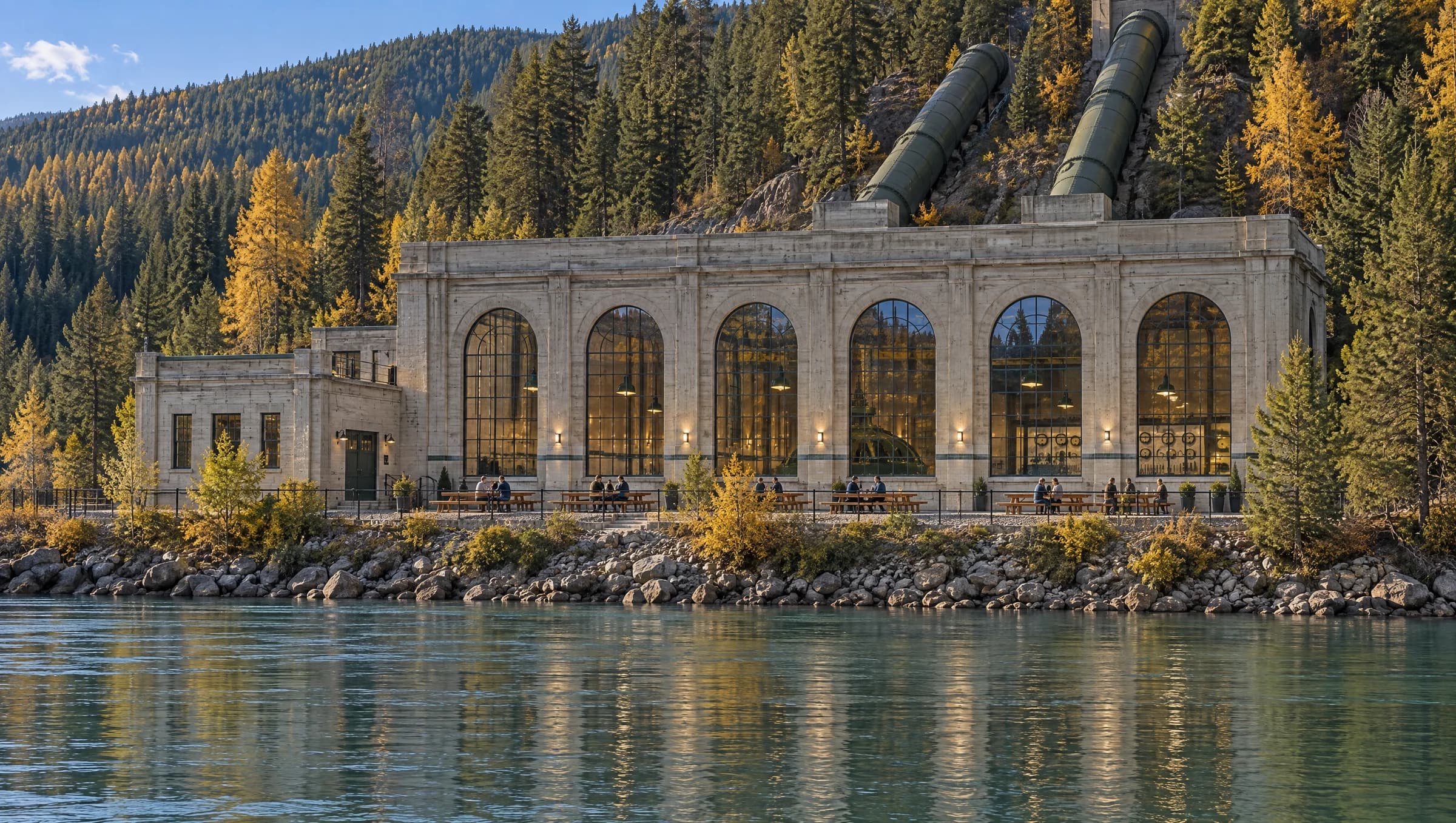
Breaker Room sits in a 1923 hydroelectric powerhouse on a reservoir stretch of the Kootenay River at Dynamo, on Highway 3A between Castlegar and Nelson. The walls are pale board-formed concrete, you can still see the grain of the wooden forms in them, and the roof line is a flat parapet.
Six tall round-arched steel windows face the river. Two green riveted penstocks come down the hillside behind, the pipes that once dropped water onto the turbines. The green entrance door is in the smaller wing at the landward end, level with the parking lot.
What stayed in the machine hall
The taproom is the old machine hall: twelve metres from the floor to a riveted steel roof truss. The walls have a cream glazed tile wainscot with one deep green band at shoulder height, and the floor is grey terrazzo with brass strips set into it.
The yellow gantry crane is still on its rails overhead. One of the station's two generators stayed on the floor, behind a low railing, and its copper coils are still inside. You can see them through the inspection port. The two Francis turbines sat under the floor where the long tables are now.
- The 1923 generator in the middle of the floor
- The yellow gantry crane on its original rails
- The marble switchboard that is now the tap wall
- Cream tile with one green band over a terrazzo floor
The switchboard is the tap wall
The bar runs along the east wall, and behind it stands the station's original white marble switchboard. It has eight marble panels, each with two brass meters. We put one faucet under each panel, so every beer on tap has its own panel of the old board.
The tap board on this site works the same way. Each beer shows its strength, its bitterness, how many days since its keg was tapped, and how much is left. The brewhouse sits behind glass at the north end, so you can watch a brew day from your table.
Where the names come from
Every beer is named for a piece of the station. The breaker room was the gallery where the main circuit breakers lived, and it gave the brewery its name. Mainline is the feeder cable that carried the power out to the valley. Blackout is what the valley called the three days the 1948 flood knocked the station out.
The floodgates are still up the river at the dam. On a spring melt you can hear them from the patio.
The room has rules
The hall gets loud on a Friday, and the rules stay short. The bar rail is adults only, 19 and over. Kids are welcome with an adult until 8 PM. Nobody gets pushed toward another round.
The driver of your table drinks free all night from the no-alcohol list: the house root beer, hop water, cold brew, coffee and pop. The best nights in the hall end with a favourite beer, a full table, and everyone getting home safe.
Questions
What is Breaker Room Brewing built around?
A 1923 hydroelectric powerhouse on the Kootenay River at Dynamo, BC. The taproom is the old machine hall, with one original generator in the middle of the floor, the gantry crane overhead, and the marble switchboard behind the bar as the tap wall.
Why use an old powerhouse for a brewery?
The machine hall was built to carry heavy machinery, which suits tanks and a busy room, and it is tall enough to hold a crowd without feeling crowded. It also came with its own story. The crane, the generator and the switchboard needed a use, and a tap wall is a good one.
What makes the beer board different?
It is the powerhouse's original marble switchboard. Each of the eight beers has its own marble panel with brass meters and a faucet, and the tap board on this site shows when each keg was tapped and how much is left.