How to read a craft beer menu without pretending
ABV, IBU, style, freshness, tasting notes, and the useful questions to ask before ordering.
The short answer
To read a craft beer menu, start with style, then use ABV for strength, IBU for likely bitterness, tasting notes for aroma and flavour, and freshness for hoppy beers. The best question at the bar is still simple: what is pouring freshest today.
- ABV tells you how strong a beer is. It says nothing about heaviness or quality.
- IBU can signal bitterness, but malt, sweetness, acidity and aroma change how bitter a beer tastes.
- Style gives the fastest clue: lager is crisp, sour is tart, porter is roasty, and IPA puts the hops up front.
Read style before numbers
Beer style is the fastest shortcut on the board. A lager usually means crisp malt and a clean finish, a pilsner adds a firmer hop snap, a pale ale sits in the citrus and malt middle, an IPA moves hops to the front, a sour brings acidity, and a porter leans into roast.
Once you know the style, the numbers start making sense. A 5% pilsner and a 5% sour can feel completely different, because bitterness, carbonation, acidity, malt and temperature all shape the glass.
ABV is about strength
ABV means alcohol by volume. It helps you pace the visit, compare pours, and decide whether a taster or a pint makes sense. It does not tell you whether the beer is sweet, bitter, heavy or refreshing.
On our board, Mainline Lager at 4.8% is the clean, easy one to start with, and Breaker IPA at 6.7% carries more hops and more strength. The number helps you plan. The style tells you what to expect.
- Under 5% usually suits a longer, slower visit.
- 5% to 6.5% covers many standard ales, lagers, ambers and sours.
- Above 6.5% deserves slower pacing, smaller pours, or food alongside it.
Treat IBU as a clue
IBU means international bitterness units. It measures compounds from hops that add bitterness, but it does not capture how bitter the beer will feel to every drinker. Malt sweetness, carbonation, acidity, water and hop aroma all change what you taste.
On our board, Breaker IPA sits at 62 IBU and tastes sharp and dry. Turbine Hazy is 38 IBU but smells far hoppier than that number suggests, because most of its hops go in after fermentation, for aroma. Read IBU as a signal, then ask how the beer actually lands.
Freshness matters most for hoppy beer
All beer benefits from good storage, but hop-forward styles show their age fastest. Bright citrus, pine, tropical fruit and green hop aroma fade as oxygen and warmth do their damage. Cold storage slows that decline.
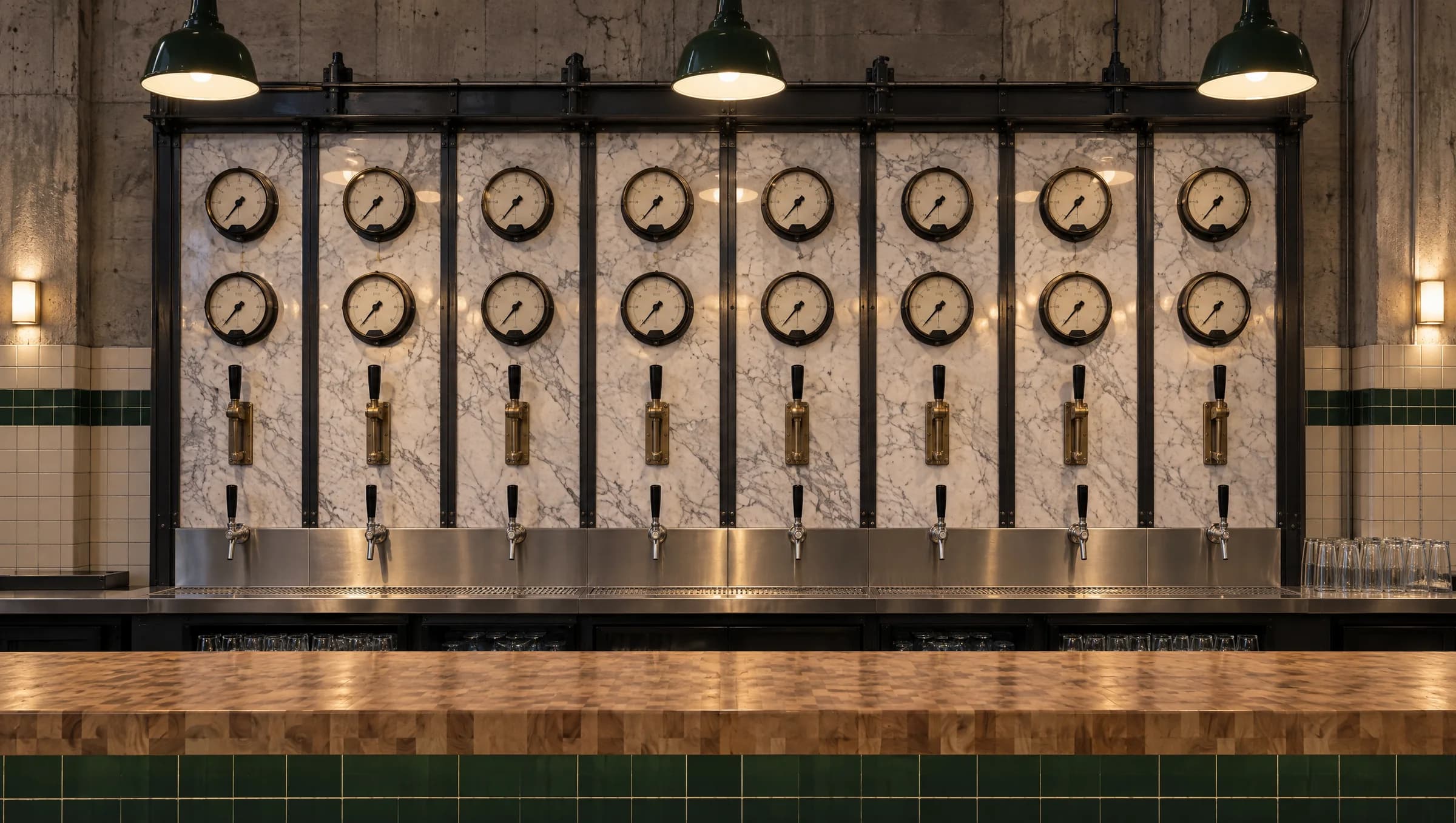
If you are choosing between cans, ask what was canned most recently. If you are choosing a pour, ask what was tapped last. Our tap board prints both for every beer on the wall: how many days since the keg was tapped, and how much of it is left.
Questions
What does ABV mean on a beer menu?
ABV means alcohol by volume. It tells you how strong the beer is, but it does not tell you whether the beer tastes light, heavy, sweet, bitter, or tart.
Does higher IBU always mean a beer tastes more bitter?
No. Higher IBU can suggest more bitterness, but malt sweetness, acidity, carbonation, freshness, and hop aroma all affect how bitter a beer tastes.
What should I ask at a brewery if I do not know beer styles?
Ask what is pouring freshest, then say whether you want crisp, hoppy, dark, tart, light, or malty. Good taproom staff can turn that into a pour, or a flight of four.